
In an interview, SoftBank’s Sumer Juneja said the Japanese investment giant is confident of deploying capital in India, even through smaller, sharper bets.
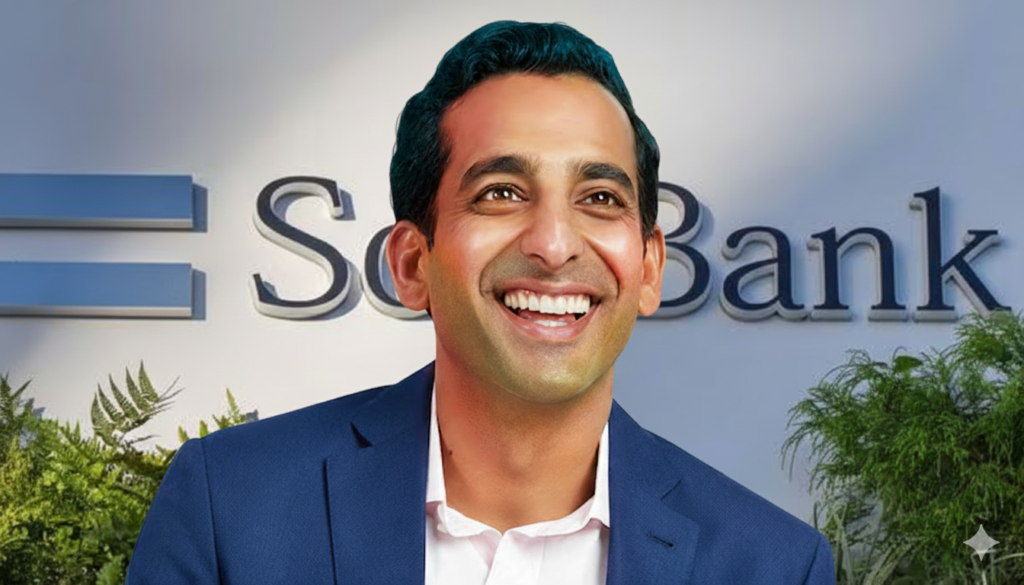
Sumer Juneja, Managing Partner, SoftBank Investment Advisers
SoftBank Investment Advisers Managing Partner Sumer Juneja has confirmed that the investment giant will restart India deployments beginning in 2026, marking a renewed push into one of its most important global markets.
Juneja said the Japanese investment giant is “confident that it will deploy capital” and made it clear the firm has no intention of sitting out India’s next growth cycle. “We don’t want to be out of the game for sure,” he said, adding that the team is prepared to write smaller cheques if that’s what it takes to stay active: “We are not going to stay out of the market,” he said in an interview, a day after its portfolio company Meesho’s blockbuster listing.
While eight of SoftBank’s India portfolio firms have gone public in the last three years, it has stayed away from making fresh investments in the region during this period.
Even as SoftBank did follow-on rounds, in companies like Meesho to retain its stake in existing portfolio companies, it was largely absent and did not sign any new deals, apart from fintech company Juspay, in the past two years or so. That is changing now.
Juneja asserted that the firm is “not in exit mode” and said it will start making investments in AI-related themes as it sees a strong pipeline of deals.
When asked if SoftBank will sign more deals over the coming months, he said: “Yes, we will…Will we be doing deals? Yes. We have a good pipeline. So, we’re confident that we will deploy capital in 2026.”
“Over the last 12 months, the pipeline of quality founders and companies has become more and more robust. The entrepreneurs we’re meeting now are of high quality,” he added.
During the slowdown in 2023 or so, SoftBank had shown willingness to write smaller cheques of over $50 million – instead of doing the typical larger rounds of $100 million plus, where it finds more comfort.
“We want to continue investing in India. We don’t want to be out of the game for sure. Now, if that means we have to do deals that are $25 million, we’ll do it. If it means we have to do $20 million, we’ll do it. But we are not going to stay out of the market,” Juneja said.
Going forward, SoftBank will largely focus on startups that have an AI play.
AI consumer companies, AI apps, AI video editing companies, and B2B AI companies that deal with enterprises, like healthcare, are some sectors that excite SoftBank. Even Indian founders, building for the world, by relocating to the Valley or even being based in India, is another theme SoftBank is chasing.
This mirrors SoftBank’s global strategy, where it has been betting big on AI firms.
“We have always played the AI theme…where it was an entrepreneur, a tech-first entrepreneur, using machine learning, using AI, and disrupting an existing industry. We’re actually creating new options, new apps, which didn’t exist in the 2022 era,” Juneja said.
Juneja also added that founders have become more judicious about fundraising, and the frugality that investors demanded during the 2023 period has resulted in companies raising fewer rounds and diluting lesser stake.
Startups are also raising less capital because they are opting to go public sooner and providing liquidity to early backers. More and more startup IPOs have also meant large investors like SoftBank actually “competing against the IPO market as well,” Juneja said.
“It’s maybe not great for us because we are competing with IPOs, but for the ecosystem, it’s phenomenal because the best thing you can do to any ecosystem is to give it more capital,” he concluded.